
Mount Nyamuragira Volcano Trekking Guide: Conquer Africa’s Most Active Shield Volcano
Mount Nyamuragira, Africa’s most active shield volcano, offers a demanding trek through volcanic landscapes in the Virunga Mountains of the Democratic Republic of Congo. This guide covers its geology, trekking routes, safety, permits, and how to combine the adventure with gorilla trekking in Virunga National Park.
Quick Volcano Snapshot
| Volcano type | Shield volcano |
|---|---|
| Elevation | 3,058 meters |
| Location | Virunga Mountains, Democratic Republic of Congo |
| Activity status | Active |
| Trekking difficulty | Demanding |
| Typical trek duration | 8 to 12+ hours |
| Altitude gain | Approximately 3,058 meters |
| Terrain type | Lava fields, volcanic ash slopes, dense forest, rugged volcanic terrain |
| Best season | Dry seasons: June to August and December to February |
| Temperature range | Below freezing near summit to warm tropical at base |
| Permit requirement | Required (Virunga National Park permit) |
The Experience of Hiking Mount Nyamuragira
Approaching Mount Nyamuragira, the vast shield volcano dominates the horizon with its broad, gently sloping cone. The landscape shifts dramatically from dense tropical forests to barren lava fields, revealing the raw power of geological forces. The air carries a faint sulfuric tang, hinting at the volcano’s restless nature. As you ascend, the terrain becomes rugged and exposed, with the silence broken only by the crunch of volcanic rock underfoot and distant birdcalls. Reaching the summit caldera, the panorama unfolds—an immense volcanic basin shaped by countless eruptions. The emotional impact of standing on Africa’s most active volcano, surrounded by the echoes of molten earth, is profound and humbling.
Mount Nyamuragira: Geological Background
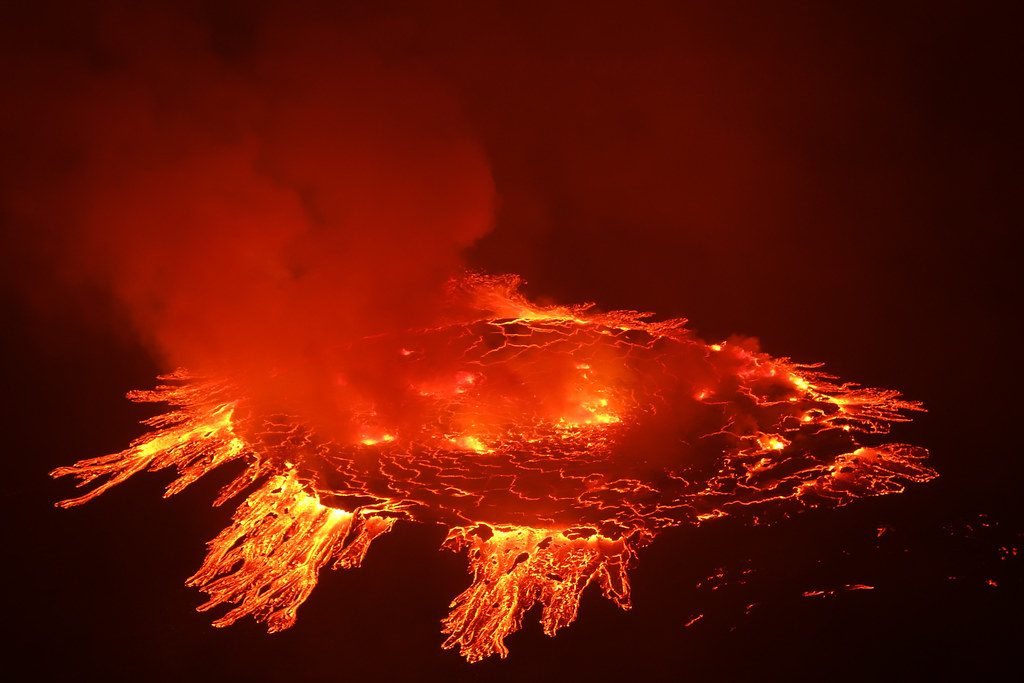
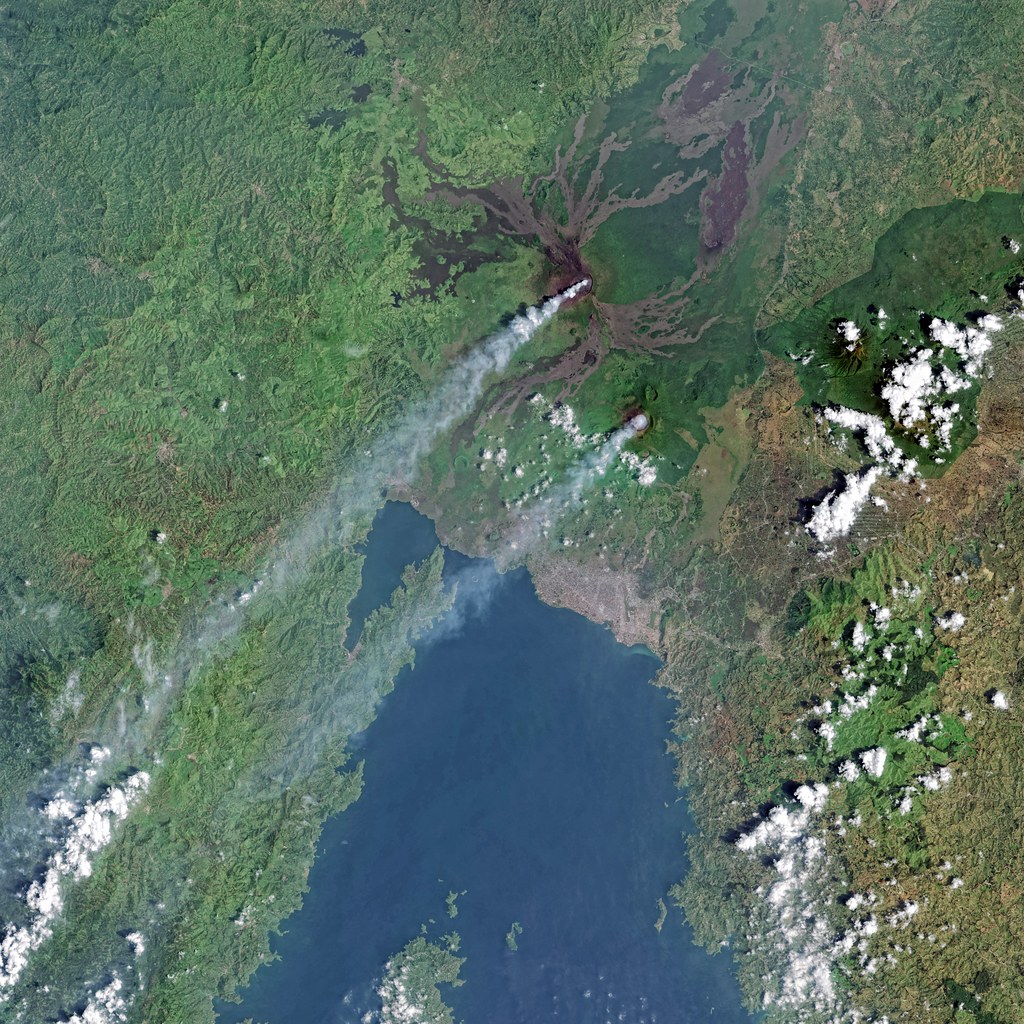
Mount Nyamuragira is a massive shield volcano formed by fluid basaltic lava flows that have built its broad, gently sloping profile over millennia. Located in the East African Rift Valley, it is part of the Virunga volcanic chain. Since 1885, it has erupted over 40 times, making it Africa’s most active volcano. Its eruptions often occur along radial fissures, producing extensive lava flows that reshape the surrounding landscape. The summit caldera spans about 2 kilometers wide with walls rising 500 meters. Inside, a lava lake formed in 2014 reaches depths of approximately 500 meters. The volcano emits sulfur dioxide and hosts fumaroles and steam vents, creating sulfur deposits and unique mineral formations. Its activity profoundly influences local ecosystems and geology.
Terrain and Hiking Experience on Mount Nyamuragira
The trek begins in lush tropical forest, where dense vegetation and wildlife accompany the early ascent. As you climb higher, the terrain shifts to volcanic ash slopes and rugged lava fields. Hikers encounter loose pumice, sharp volcanic rocks, and occasional steep sections requiring careful footing. The trail can be slippery, especially after rains, and bamboo thickets add to the challenge. Near the summit, exposure to wind and colder temperatures increases, and the air thins. The volcanic terrain demands endurance and agility, with some scrambling over jagged lava flows. The diversity of terrain—from forest to barren volcanic rock—makes the hike both physically demanding and visually striking.
What Makes Mount Nyamuragira Trek Unique
Mount Nyamuragira’s uniqueness lies in its status as Africa’s most active shield volcano, with frequent eruptions that continuously reshape its landscape. Unlike many volcanoes, it features a deep, growing lava lake within its caldera. The volcano’s eruptions often create new smaller cones on its flanks, a rare phenomenon. The trek offers a rare combination of volcanic adventure and rich biodiversity, as it lies within Virunga National Park, home to endangered mountain gorillas and diverse wildlife. The opportunity to combine volcano trekking with gorilla safaris and birdwatching in one of Africa’s oldest national parks adds exceptional value to the experience.
Summit and Crater Experience on Mount Nyamuragira
Reaching the summit caldera reveals a vast volcanic amphitheater, with walls towering 500 meters above the crater floor. The deep lava lake, shimmering with molten rock, emits a faint glow and sulfurous steam. The air is thick with the smell of sulfur, and the occasional hiss of escaping gases punctuates the silence. From the rim, panoramic views stretch across the Virunga Mountains, neighboring volcanoes like Nyiragongo, and the distant Lake Kivu. The raw, elemental power of the volcano is palpable here, a reminder of Earth’s dynamic forces. The summit’s stark beauty and geological drama leave a lasting impression on every trekker.
Best Time to Trek Mount Nyamuragira
The optimal time to hike Mount Nyamuragira is during the dry seasons from June to August and December to February. These months offer clearer skies, firmer trails, and reduced risk of rain-induced mudslides. Dry conditions improve visibility of the crater and lava lake, enhancing photography and summit views. Trekking outside these periods can be challenging due to slippery volcanic ash and dense vegetation. Volcanic activity is monitored continuously, and trekkers should check for any restrictions or warnings before planning their trip. Early morning starts are recommended to avoid afternoon winds and heat.
Trekking Routes and Trail Options on Mount Nyamuragira
The primary trekking route begins at Bukima Patrol Post in Virunga National Park. From here, hikers ascend through forested slopes before entering volcanic terrain. The trail covers approximately 15 to 20 kilometers with an elevation gain of over 3,000 meters. The trek typically takes 8 to 12 hours, often requiring an overnight stay at the summit bungalow or camping with personal gear. Guided treks are mandatory due to park regulations and safety concerns. Porters and cooks can be hired to assist. Alternative routes are limited due to the volcano’s active nature and dense surrounding forest. Combining this trek with nearby Mount Nyiragongo hikes is popular among adventurers.
Difficulty Assessment of Mount Nyamuragira Trek
Mount Nyamuragira is classified as a demanding volcano trek. The combination of steep elevation gain, rugged volcanic terrain, and variable weather requires good physical fitness and hiking experience. The trail involves navigating loose volcanic ash, sharp lava rocks, and dense forest sections. Altitude effects become noticeable near the summit, where temperatures can drop below freezing. The trek is not technical mountaineering but demands endurance, careful footing, and preparation for sudden weather changes. Beginners should consider guided tours with experienced rangers and adequate acclimatization.
Essential Volcano Trekking Gear for Mount Nyamuragira
Key gear includes sturdy hiking boots with excellent grip for volcanic rock and ash, trekking poles to aid balance on loose terrain, and gaiters to protect against volcanic ash and debris. A windproof and waterproof jacket is essential for summit conditions. Warm layers, gloves, and a hat are needed for cold temperatures near the crater. A headlamp is recommended for early starts or overnight stays. Due to sulfur emissions, a lightweight gas mask or respirator can improve comfort. Ample hydration systems, sun protection (sunscreen, sunglasses), insect repellent, and packed high-energy food are also vital for the demanding trek.
Safety and Volcanic Hazards on Mount Nyamuragira
Mount Nyamuragira’s active status poses several hazards including sudden eruptions, toxic volcanic gases like sulfur dioxide, unstable crater edges, and falling rocks. Loose scree and sharp lava flows increase the risk of slips and injuries. Weather can change rapidly, bringing cold temperatures and strong winds near the summit. Trekkers must follow guidance from Virunga National Park rangers and heed volcanic activity updates from the Goma Volcano Observatory. Emergency evacuation plans are in place, but access can be difficult. Proper preparation, staying on marked trails, and using experienced guides are critical for safety.
Permits, Guides, and Logistics for Mount Nyamuragira Trek
Trekking Mount Nyamuragira requires permits issued by Virunga National Park authorities. Park entry fees and mandatory guided tours ensure safety and conservation. Guides provide essential briefings on volcanic hazards and local wildlife. Porters and cooks can be hired to support multi-day treks. Access to the trailhead is typically from Goma, with a 3 to 4-hour drive on rugged roads. Visitors must arrange transport and accommodation in advance due to limited infrastructure. Security conditions in eastern Congo can be volatile; travelers should consult local authorities and tour operators for current information.
Where to Stay Near Mount Nyamuragira
Accommodation options near Mount Nyamuragira include tented camps such as Tchegera Island and Kibumba, offering proximity to trailheads and scenic views. Virunga National Park lodges like Bukima and Mikeno provide comfortable bases with ranger support. For summit stays, a bungalow is available at the volcano’s peak, though it requires advance booking and additional fees. Camping is possible but trekkers must bring their own gear. Nearby Goma city offers hotels and guesthouses for pre- and post-trek stays, with access to supplies and transport. Early booking is advised due to limited availability.