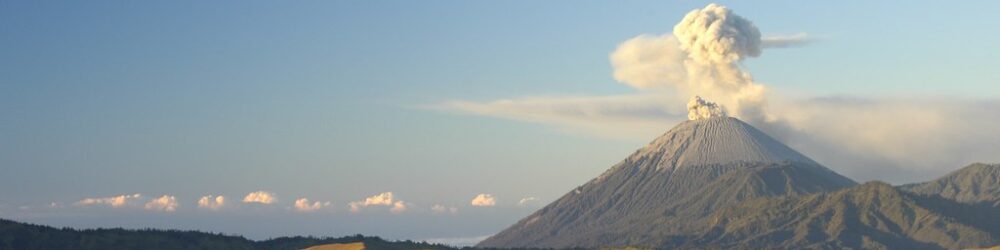

Mount Hachijo-Fuji Volcano Trekking Guide: Conquer Japan’s Remote Island Giant with Ocean Vistas
Mount Hachijo-Fuji, a dormant stratovolcano on Japan’s remote Hachijo Island, offers a unique volcano trekking experience. This guide covers its geology, hiking routes, terrain challenges, and practical logistics for adventurers seeking panoramic ocean views and a volcanic crater walk in the Izu archipelago.
Quick Volcano Snapshot
| Volcano type | Stratovolcano |
|---|---|
| Elevation | 854 meters |
| Location | Hachijo Island, Japan |
| Activity status | Dormant |
| Trekking difficulty | Moderate |
| Typical trek duration | 3 to 4 hours |
| Altitude gain | Approximately 370 meters |
| Terrain type | Volcanic ash slopes, stone steps, rocky crater rim, overgrown shrubs |
| Best season | Year-round, best in clear weather outside rainy season |
| Temperature range | 15°C to 25°C (59°F to 77°F) depending on season |
| Permit requirement | No permit required |
The Experience of Hiking Mount Hachijo-Fuji
Approaching Mount Hachijo-Fuji, the island’s iconic conical peak rises sharply against the vast Pacific Ocean backdrop. The trail leads through lush subtropical forests before emerging onto volcanic ash slopes and rugged stone steps. The contrast between dense greenery and barren volcanic terrain evokes a profound sense of Earth’s raw power. Reaching the crater rim, hikers are rewarded with sweeping ocean panoramas and the rare chance to circumnavigate a volcanic crater on a remote island. The wind-swept summit and the quiet presence of the dormant volcano create an unforgettable atmosphere of geological grandeur and solitude.
Geological Background of Mount Hachijo-Fuji
Mount Hachijo-Fuji is a classic stratovolcano formed approximately 10,000 years ago as part of the Izu volcanic arc. Its symmetrical cone shape closely resembles Japan’s famous Mount Fuji, earning it the nickname Hachijo-Fuji. The volcano last erupted around 1605, since when it has remained dormant. The crater, about 500 meters in diameter, hosts a small lake and the Sengen Shrine, nestled among colorful volcanic stones. The mountain’s geology features eroded basalt cliffs, volcanic ash deposits, and fumaroles that once emitted steam and sulfur gases. The volcanic minerals enrich the soil, supporting the island’s lush subtropical flora that contrasts sharply with the barren summit.
Terrain and Hiking Experience on Mount Hachijo-Fuji
The hike begins at about 500 meters elevation, ascending steeply via roughly 1,280 stone steps through cattle pastures and forested slopes. The volcanic ash and loose pumice make footing variable, requiring careful steps especially on the crater rim where exposure to wind is significant. Some sections are overgrown with shrubs, adding a wild character to the trail. The terrain demands moderate fitness and sure-footedness but no technical climbing skills. Temperature and wind conditions can shift rapidly near the summit, so layered clothing is essential. The trail’s mix of natural volcanic surfaces and man-made stone steps creates a unique hiking rhythm.
What Makes the Mount Hachijo-Fuji Trek Unique
This trek stands out for its remote island setting, combining volcanic adventure with expansive ocean views rarely found on mainland volcanoes. The ability to walk the entire crater rim offers a rare perspective on volcanic morphology. The presence of the Sengen Shrine inside the crater adds cultural depth to the geological experience. Unlike crowded volcanoes, Hachijo-Fuji’s trails are quiet and intimate, surrounded by subtropical forests and volcanic cliffs. The panoramic vistas stretch over the Pacific Ocean and neighboring volcanic islets, creating a dramatic and serene environment unique to the Izu archipelago.
Summit and Crater Experience at Mount Hachijo-Fuji
Reaching the summit reveals a broad volcanic crater rim with breathtaking views of the island’s coastline and the endless Pacific Ocean. The crater’s interior features a small lake and the colorful Sengen Shrine, where visitors leave inscriptions and wishes. The air carries faint traces of sulfur, a reminder of the volcano’s fiery past. The wind whistles across the exposed rim, and the silence is punctuated only by distant seabirds. The panoramic landscape includes neighboring Hachijo-kojima island and, on clear days, the horizon stretches unbroken. This sensory encounter with volcanic power and ocean vastness is both humbling and exhilarating.
Best Time to Trek Mount Hachijo-Fuji
Mount Hachijo-Fuji can be trekked year-round thanks to the island’s mild subtropical climate. However, the best conditions occur outside the rainy season, typically avoiding the heavy precipitation from June to early July and typhoon season in late summer. Clear days in spring and autumn offer optimal visibility and comfortable temperatures between 15°C and 25°C. Early morning climbs are recommended to avoid afternoon winds and to enjoy calm conditions on the crater rim. Sudden weather changes can occur, so hikers should monitor forecasts and be prepared for fog or wind near the summit.
Trekking Routes and Trail Options on Mount Hachijo-Fuji
Two main routes lead to the summit. The popular shorter route starts at a trailhead accessible by car along the Hachimaki circuit road, ascending via 1,280 stone steps and taking about 50 minutes to reach the crater rim. This route is suitable for most hikers seeking a moderate challenge. The longer sea-to-summit route begins near the ferry terminal at Sokodo Campsite, following roads and trails for approximately 14.5 kilometers and requiring around seven hours round trip. This route offers a full island traverse and deeper immersion in the volcanic landscape. Both routes allow a crater rim loop hike of about one hour. Guided and self-guided options are available.
Difficulty Assessment of Mount Hachijo-Fuji Trek
Classified as a moderate volcano trek, Mount Hachijo-Fuji requires good physical fitness but no technical climbing skills. The main challenges are the steep stone steps, uneven volcanic terrain, and exposure to wind near the summit. Altitude is modest at 854 meters, so altitude sickness is not a concern. The trail’s length and elevation gain (approximately 370 meters) make it accessible to hikers with some experience. Navigation can be tricky on overgrown sections, so a guide or detailed map is recommended for first-timers. Overall, it is an achievable trek for adventurous travelers comfortable with moderate hiking conditions.
Essential Gear for Trekking Mount Hachijo-Fuji
Key gear includes sturdy hiking boots with good grip for volcanic ash and stone steps, trekking poles to assist on steep ascents and descents, and gaiters to protect against ash and shrub scratches. A windproof jacket is essential for summit exposure, along with layered clothing for temperature changes. Sun protection such as a hat, sunglasses, and sunscreen is vital due to limited shade. Carry sufficient water and snacks, as facilities are scarce on the trail. A headlamp is recommended for early morning starts. While volcanic gases are minimal on this dormant volcano, a light respirator can be considered for sensitive individuals.
Safety and Volcanic Hazards on Mount Hachijo-Fuji
Though dormant, Mount Hachijo-Fuji’s volcanic terrain presents hazards such as loose scree, unstable crater edges, and hidden potholes on overgrown paths. Strong winds near the summit can affect balance and increase exposure risk. Sudden weather changes may reduce visibility and trail safety. There is no current volcanic activity, but hikers should stay informed via local monitoring agencies and heed any official warnings. Carry a first aid kit and inform others of your trekking plan. Avoid venturing too close to crater edges and respect trail markers to minimize risk.
Permits, Guides, and Logistics for Mount Hachijo-Fuji
No permits or park fees are required to hike Mount Hachijo-Fuji. Hiring a local guide is recommended, especially for the longer sea-to-summit route, to navigate less obvious trails and enhance safety. Guides also provide valuable geological and cultural insights. The island is part of Fuji-Hakone-Izu National Park, but regulations are minimal. Seasonal closures are rare but check local advisories. Access to trailheads is best by rental car or taxi, as public transport is limited. Planning logistics carefully ensures a smooth trekking experience on this remote island.
Where to Stay Near Mount Hachijo-Fuji
Accommodation options on Hachijo Island include Japanese-style inns (ryokan), hot spring resorts, guesthouses, and budget hostels near the ferry terminal and airport. Popular choices are Hotchy Joes hostel adjacent to a local dive shop and minshuku lodgings offering authentic island hospitality. Staying near the ferry terminal or airport provides easy access to the sea-to-summit trail start. For those driving, lodges closer to the Hachimaki circuit road trailhead offer convenience for the shorter ascent. Booking in advance is advised, especially during peak seasons.
![Mount Iwate volcano trek - Mt. Iwate / 岩手山(いわてさん)[9120 x 3380 = 30.9MP]](https://nadirview.com/wp-content/uploads/2026/03/01-mt-iwate-9120-x-3380-30-9mp.jpg)