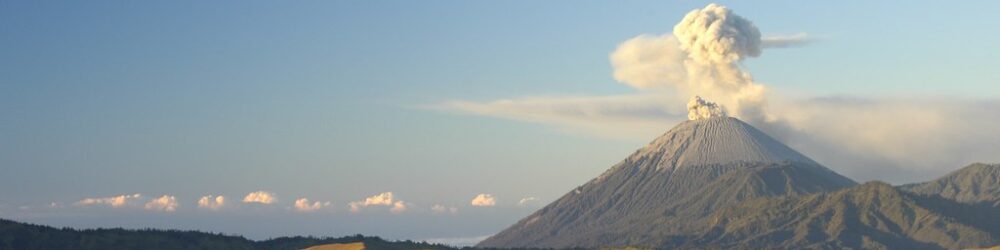

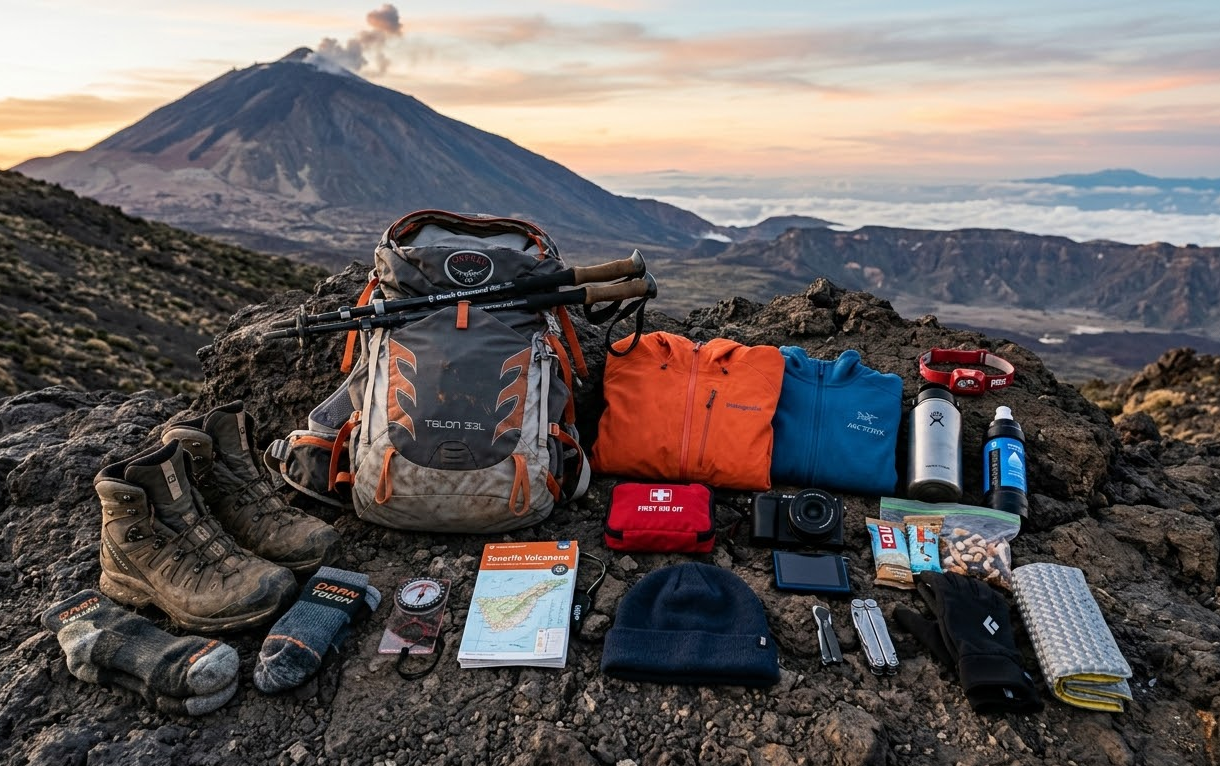
Hiking a volcano is a transformative experience, but the terrain is notoriously unforgiving. Whether you are trekking across the frozen lava fields of Iceland or ascending the active, ash-shrouded peaks of Guatemala, your gear is your lifeline. This guide breaks down the essential equipment into five critical categories: The Layering System, Footwear & Traction, Technical Hardware, Health & Safety, and Electronics.
1. The Layering System: Managing Microclimates
Volcanoes create their own weather. You might start in a humid tropical jungle at the base and end in a sub-zero, wind-whipped crater at the summit. The “Three-Layer Rule” is non-negotiable.
Base Layers (Moisture Management)
- Material: Synthetic (Polyester/Nylon) or Merino Wool. Avoid cotton at all costs, as it holds moisture, leading to hypothermia in high-altitude winds.+1
- Top & Bottom: Lightweight long sleeves provide sun protection and moisture wicking. Even in hot climates, long pants protect against razor-sharp volcanic rock.
Mid-Layers (Insulation)
- Fleece Jacket: A breathable mid-layer for active movement.
- Down or Synthetic Puffy: Essential for the summit. When you stop moving to watch a sunrise or a lava flow, your body temperature drops instantly. Choose a “hydrophobic down” if you are in wet environments like Indonesia or the Pacific Northwest.
Outer Shell (Protection)
- Hard Shell Jacket: Must be windproof and waterproof (Gore-Tex or similar). Volcanic ridges are often subject to “venturi effects” where wind speeds double.
- Rain Pants: Lightweight pull-overs to keep your base layers dry and block the wind.
2. Footwear: The Battle Against Basalt
Volcanic rock (specifically ‘a‘ā lava) is essentially a field of broken glass and sandpaper. Standard sneakers will be shredded within hours.
- High-Ankle Hiking Boots: Choose boots with a stiff sole (Vibram is the gold standard). High ankles are vital to prevent rolling on unstable scree and to keep hot ash from entering the boot.
- Gaiters: These are a “pro-tip” for volcano hikers. Scree gaiters prevent small, sharp volcanic pebbles and fine ash from sliding into your boots, which can cause severe blisters.
- Socks: Heavy-duty Merino wool socks with reinforced heels and toes. Always pack two spare pairs in a waterproof bag.
3. Technical Hardware & Tools
The incline on a volcano is often steeper than a standard mountain because you are climbing a cone of loose debris.
- Trekking Poles: These are mandatory for the descent. Descending a “scree slope” (loose volcanic rock) is like skiing on gravel; poles provide the stability needed to protect your knees.
- Headlamp (with extra batteries): Many volcano hikes begin at 2:00 AM to reach the summit for sunrise. A high-lumen (300+) lamp is necessary to spot trail markers in the dark.
- Backpack (25L–35L): A rugged pack with a built-in rain cover. Ensure it has an internal frame to balance the weight of the heavy water supply you’ll need.
This is where a volcano packing list diverges from a standard mountain kit.
Respiratory Protection
- Buff or Bandana: At a minimum, to keep dust out of your lungs.
- Respirator/Gas Mask: If you are visiting “Active” zones (like the Danakil Depression or certain peaks in Italy), a mask with P100 particulate filters and acid gas cartridges is required to filter out sulfur dioxide (SO2).
Eye & Skin Protection
- Polarized Sunglasses: Volcanic sand can be highly reflective, and high-altitude UV is intense.
- Sunscreen (SPF 50+): There is rarely shade on a volcano.
- Gloves: Sturdy leather-palmed gloves. If you slip on a lava field, you do not want to catch yourself with bare hands on glass-sharp rock.
5. Hydration and High-Calorie Fuel
Volcanic soil is porous; there are rarely streams or springs on the side of a volcano. You must carry every drop of water you need.
- Water Capacity: 3 to 4 liters per person for a full-day hike. Use a combination of a hydration bladder for frequent sips and a hard Nalgene bottle as a backup.
- Electrolytes: Ash and heat cause rapid dehydration. Use salt tabs or powder mixes.
- The “Summit Treat”: High-altitude hiking suppresses appetite. Bring calorie-dense foods you actually enjoy—nuts, dried mango, chocolate, or energy gels.
6. Electronics & Navigation
- Power Bank: Cold altitudes drain phone batteries rapidly.
- Offline Maps: Use apps like AllTrails or Gaia GPS, but download the maps beforehand. Volcanic minerals can occasionally interfere with GPS signals, so a physical compass is a smart backup.
- Camera Care: Volcanic ash is silica-based (glass). Never wipe your camera lens with a cloth if there is ash on it; you will scratch the glass. Use a blower brush or air puffer.
Summary Checklist for your Backpack:
- [ ] Emergency Whistle (usually on the backpack chest strap)
- [ ] Space Blanket (for emergency bivouac)
- [ ] First Aid Kit (focus on blister care and antiseptic for “lava rash” scrapes)
- [ ] Multi-tool/Knife
- [ ] Waterproof Dry Bags (for all electronics and spare clothes)
Pro-Tip for the Descent
When you reach the “scree” sections on the way down, loosen your laces slightly at the toes but keep them tight at the ankle. This prevents “toe-bang” against the front of your boot as you slide down the volcanic ash.
